

Production

Project initiator: GOR INVESTMENT LIMITED
Project operator: IP LLC "BIPROFED"
Investments: Stage I and Stage II — 0.7 billion USD
Stage III — 0.7 billion USD
Project implementation timeline: Overall project implementation timeline – up to 5 years
Stage I – 3 years
Stage II – 1 year
Stage III – 1 year

Production of bioprotein – BIPROFED

In modern conditions of population growth, deficit of land and water resources, adverse climate change, and deterioration of integration links during the pandemic, there is a need for efficient growth in productivity of livestock and aquaculture complexes to strengthen food security of the Republic of Uzbekistan.

This project proposes organization of modern environmentally and resource-saving production of feed proteins through cultivation of microbial biomass in water-mineral medium saturated with gaseous hydrocarbons – natural gas.

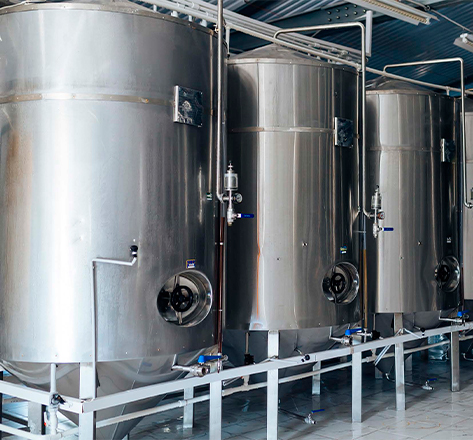
The basis of the process is a bioreactor-fermenter with a membrane feeding device using natural gas and a specially selected strain of methanotrophic bacteria-microorganisms.

Scheme of Natural Gas Processing

The existing scheme of natural gas processing with a target direction for obtaining high-quality feed for the livestock, poultry, and aquaculture sectors consists of the following sequential stages:

  1. Processing of natural gas (high-temperature reforming) with the production of ammonia and carbon dioxide.
  2. Synthesis of ammonia with carbon dioxide for the production of mineral nitrogen fertilizer – urea.
  3. Transportation and application of mineral fertilizers in the soil to increase the yield of fodder and soybean crops with an increase in volumes and improvement of feed quality.
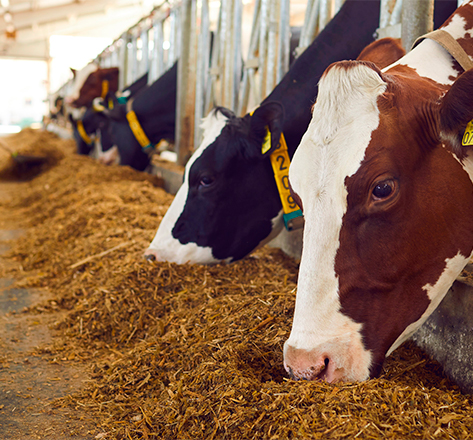
  4. Growth of productivity of livestock and aquaculture complexes due to the increase and improvement of feed, strengthening the food security of the country.
ADVANTAGES OF THE INNOVATIVE METHOD OF OBTAINING PROTEIN-VITAMIN CONCENTRATE - MICROBIAL FEED PROTEIN BIPROFED
01

Usage of
Natural Gas

Direct use of natural gas for feeding microorganisms (bacteria) with the production of protein mass BIPROFED for the production of high-quality feeds for livestock, poultry, and aquaculture.

02

Addition
of Feed Protein

Increase in productivity of livestock and aquaculture complexes due to the addition of feed protein, increase in volume and quality of feeds, strengthening of food security.

03

Opportunity to Exclude
Three Most Costly Processes

Allows excluding from the existing scheme three most costly processes (1, 2 and 3), requiring the largest capital, energy and time investments.

04

Exclusion of Dependency
on Deficit

Exclusion of dependency on deficit of agricultural lands, water resources, unfavorable seasonal and climatic conditions.

The proposed scheme for using natural gas directly to feed bacteria—thereby producing protein biomass and boosting the productivity of livestock and fish-farming facilities—eliminates the three most costly processes (stages 1, 2, and 3) from the existing workflow, which otherwise entail the highest capital, energy, and time expenditures. It also eliminates dependence on scarce agricultural land and water resources, as well as on adverse seasonal and climatic conditions.

Data obtained during product testing show that 1 tonne of the protein-vitamin supplement makes it possible to balance the protein content of 20 tonnes of compound feed:

  • additionally get 1-1.5 tonnes of poultry meat or 0.5-0.8 tonnes of beef or 10-15 thousand eggs;
  • save 5-7 tonnes of feed grain;
  • exclude from the diet of young animals about 6 tonnes of whole milk.

Microorganisms possess another valuable advantage: the ability to rapidly accumulate protein mass. For example, 500 kg of soybean plants at the seed-maturation stage can synthesize 40 kg of protein per day, whereas 500 kg of yeast cells can produce up to 1.5 tons of protein.

By utilizing microorganisms, industrial-scale production can be established within a limited area to yield large quantities of feed concentrates at any time of year, thereby eliminating adverse factors and constraints:

  • Shortage of agricultural land and water resources;
  • Adverse impact on the environment;
  • Global deficit of feed protein;
  • Impact of price fluctuations and foreign exchange rates (import);
  • Limited areas for grazing livestock.

Advantages of the fermentation production process over traditional methods

  • Stable production, independent of seasonal and climatic changes with a continuous supply cycle at fixed prices;
  • Reduction of impact on the environment;
  • Product quality is consistently high, ensuring economically efficient agricultural production;
  • Additional benefits obtained from more intensive processing (food and pharmaceutical production);
  • Stability of long-term storage of the finished product;
  • Utilization of microorganisms allows organizing industrial production on a limited area with the release of a large quantity of feed concentrates at any time of year.